The Kohinoor Diamond Likely Formed in Iron-Rich Zones Deep Beneath the Earth’s Crust, New Study Says

The Kohinoor Diamond Likely Formed in Iron-Rich Zones Deep Beneath the Earth’s Crust, New Study Says

The Kohinoor diamond has sparked wars, royal drama, and endless debate for centuries. Now, scientists believe the famous gem carries clues from a hidden world far below Earth’s surface. A new study suggests the Kohinoor may have formed inside iron-rich regions buried deep beneath the planet’s crust.

That finding changes more than just the story of one diamond. Researchers say it could reshape how experts understand the birth of some of Earth’s rarest gemstones. The study points toward a violent underground process packed with heat, pressure, and molten iron.

For a stone surrounded by myths and politics, the science behind it just became far more interesting.

The Kohinoor Formed Far Below Earth’s Surface

Ind Today / Kohinoor may have come from an even stranger place. Researchers believe the gem likely developed in iron-rich pockets located hundreds of kilometers beneath Earth’s crust.

These areas sit near the boundary between the upper and lower mantle, where temperatures reach extreme levels.

Scientists studied tiny mineral traces trapped inside ancient diamonds similar to the Kohinoor. Those microscopic inclusions act like time capsules. They reveal the chemical conditions present when the stones first formed. The team found strong signs of iron and carbon interacting under enormous pressure.

That matters because iron changes the way carbon behaves underground. Instead of forming ordinary crystals, carbon exposed to molten iron may produce unusually pure diamonds. Researchers think this process helped create some of the world’s largest and most famous gems.

The Kohinoor fits that profile perfectly. The diamond’s size and clarity have puzzled experts for years. This new theory may finally explain why the stone looks so different from many other historic diamonds.

Earth’s Mantle Holds a Much Wilder Story Than Expected

The study paints a dramatic picture of Earth’s deep interior. Far below volcanoes and tectonic plates lies a chaotic region packed with moving rock, trapped gases, and liquid metals. Scientists once believed diamonds mostly formed in stable zones. New evidence suggests the process can happen in far harsher conditions.

Iron-rich areas deep underground behave almost like giant chemical factories. Carbon dissolves into molten iron under crushing pressure. As temperatures shift, diamonds begin crystallizing from the mixture. Over millions of years, those crystals slowly grow into massive stones.

Volcanic eruptions eventually blast some of them toward the surface. That journey happens through rare explosions called kimberlite eruptions. These violent events move incredibly fast. Without them, diamonds would remain trapped underground forever.

Researchers believe the Kohinoor likely traveled this exact route. The gem probably formed billions of years ago, before rising toward Earth’s surface through ancient volcanic activity in India.

The Discovery Could Change Diamond Research Forever
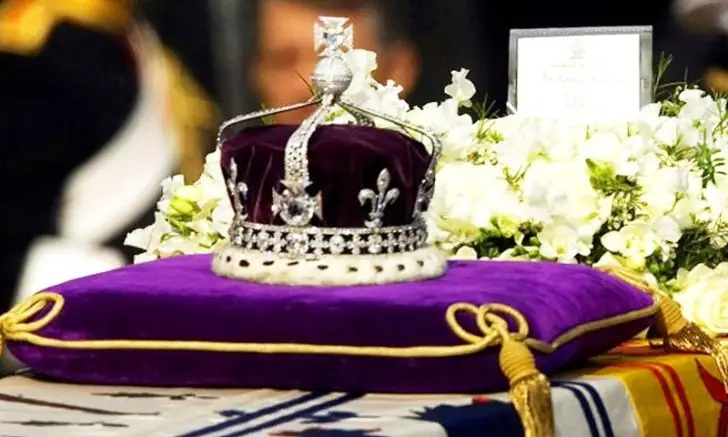
Eca / For decades, many researchers focused on carbon-rich rock formations closer to Earth’s surface. This new evidence points much deeper underground.

That shift could help experts locate undiscovered diamond deposits. Iron-rich mantle zones may hold more giant gemstones waiting to be found. Researchers also think these regions could explain the formation of other legendary diamonds tied to royal collections around the world.

The findings may even improve our understanding of Earth itself. Deep mantle chemistry remains one of geology’s biggest mysteries. Diamonds offer a rare glimpse into those hidden layers because they preserve ancient material inside them.

Some scientists describe diamonds as geological memory sticks. They carry chemical fingerprints from parts of Earth humans can never directly reach. Every trapped mineral tells part of the story.

The Kohinoor now appears to hold evidence from one of the planet’s most extreme environments.
You May Also Like

New Fire Amoeba Thrives in Boiling Hot Springs and Pushes Eukaryotic Life to Unprecedented Hottest Limit Discoveries

New Fire Amoeba Thrives in Boiling Hot Springs and Pushes Eukaryotic Life to Unprecedented Hottest Limit

Scientists have found a tiny organism living where most complex cells would quickly fall apart. A newly identified amoeba from California can actively grow and reproduce at temperatures reaching 63 degrees Celsius, or 145.4 degrees Fahrenheit. Researchers named the species ‘Incendiamoeba cascadensis,’ which translates roughly to “fire amoeba from the Cascades.” The discovery pushes the […]

Ami Ciccone October 7, 2026
Read More →
Groundbreaking Discovery Reveals How Protein Sequence Information is Translated Directly into a DNA Sequence Discoveries

Groundbreaking Discovery Reveals How Protein Sequence Information is Translated Directly into a DNA Sequence

For decades, biology students have learned a familiar path for genetic information. DNA provides instructions for RNA, and RNA helps cells build proteins from specific sequences of amino acids. A new discovery reported in Science in April 2026 adds a surprising new wrinkle to that picture. Researchers studying a bacterial defense system found a process […]

Ami Ciccone September 8, 2026
Read More →
Ancient Humans Were Master Toolmakers? New Study Unearths 500,000-YO Elephant Bone Hammer Discoveries

Ancient Humans Were Master Toolmakers? New Study Unearths 500,000-YO Elephant Bone Hammer

Ancient humans continue to surprise scientists with their remarkable skills. A newly analyzed elephant bone tool from southern England has revealed that early humans were far more inventive than many people once believed. The discovery pushes back the timeline for the development of advanced bone-tool technology in Europe by hundreds of thousands of years. The […]

Ami Ciccone August 11, 2026
Read More →
These Discoveries Changed How Historians View America’s Founding Fathers Discoveries

These Discoveries Changed How Historians View America’s Founding Fathers

America’s Founding Fathers remain some of the most studied figures in history. Their letters, speeches, and official records have filled libraries for more than two centuries. Even so, historians continue to uncover surprising discoveries that add fresh details to their lives and the nation they helped create. Modern science and archaeology have opened doors that […]

Ami Ciccone July 15, 2026
Read More →
Florida Lightning Season Begins with Tragic Kayaking Death Discoveries

Florida Lightning Season Begins with Tragic Kayaking Death

Florida’s 2026 lightning season has opened with a heartbreaking tragedy that highlights the dangers of the state’s volatile summer weather. An 18-year-old kayaker lost his life after being struck by lightning while paddling on the Blackwater River in the Florida Panhandle. The incident serves as a stark reminder that lightning can turn a routine outdoor […]

Ami Ciccone June 16, 2026
Read More →
How a Swiss Start‑Up Is Redefining the Future of Product Discovery Discoveries

How a Swiss Start‑Up Is Redefining the Future of Product Discovery

Product discovery has become one of the biggest friction points in e-commerce. Shoppers scroll through endless listings yet often see the same items repeated. Sellers upload quality products that rarely surface in search results. As online and in-store shopping continue to blend, the pressure on digital marketplaces to deliver accurate, real-time recommendations is rising fast. […]

Ami Ciccone March 1, 2026
Read More →